
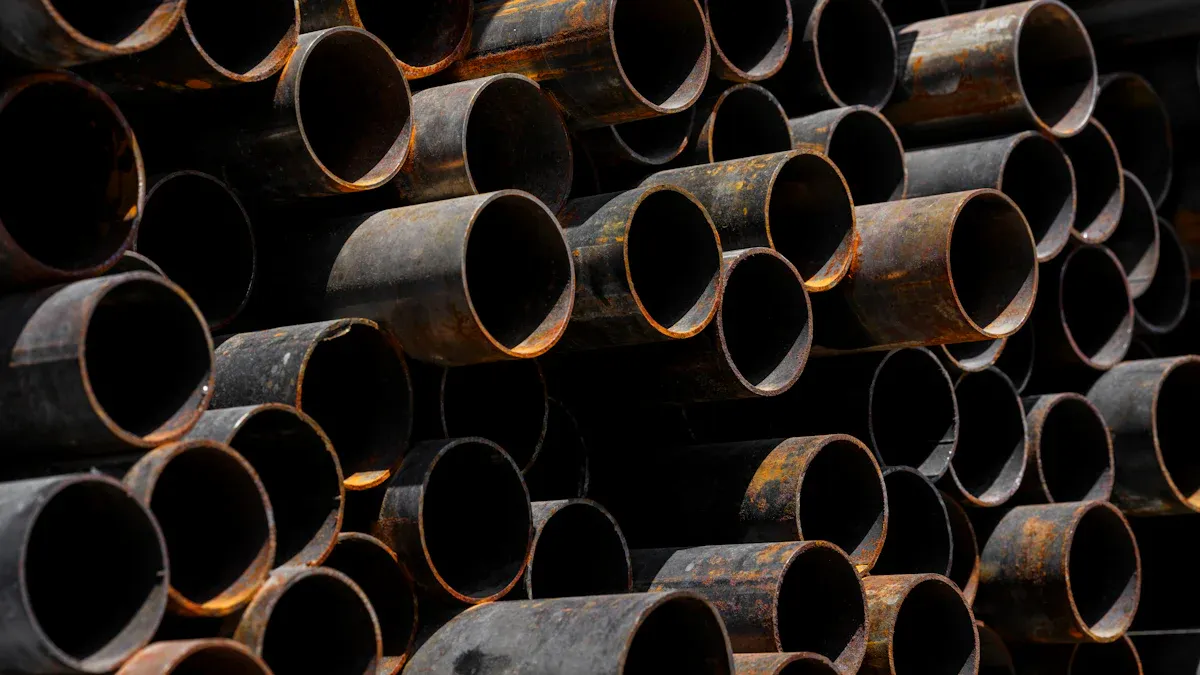
You see the applications of carbon steel in many industries because it is strong and flexible. Its toughness makes it great for building, making cars, and creating machines. În 2022, the carbon steel market was worth $6.72 miliard. De 2030, it is expected to grow to $10.39 miliard. Aceasta arată o rată de creștere anuală a 4.7%. Carbon steel is very useful for making strong structures, helpful tools, and durable parts. It plays a big role in improving modern industries.
Taxe cheie
- Carbon steel is tough and long-lasting, perfect for buildings, mașini, și mașini.
- Various kinds of carbon steel (scăzut, mediu, ridicat) meet different needs, făcându -l util în multe industrii.
- Carbon steel is affordable and easy to find, and it can be recycled to help the environment.
- It resists heat and damage, so it works well for tools and gear in tough conditions.
- Products made with carbon steel last a long time, cutting down on repairs and replacements.
Key Properties of Carbon Steel
Strength and Durability
Carbon steel is great for handling heavy loads and tough conditions. Este made mostly of iron and carbon, which makes it very strong. This material can handle a lot of pressure without bending or breaking. It also lasts a long time because it resists damage from wear and tear.
- It handles impacts well, so it doesn’t break easily.
- Its hardness helps it last longer in tough jobs.
- Many industries use it because it stays strong over time.
Carbon steel is used in building, mașini, și mașini. Its strength and durability make it reliable for important tasks.
Versatility in Composition (Scăzut, Medium, Oțel cu carbon ridicat)
Carbon steel can be made in different types to fit your needs. The three main types—low, mediu, and high carbon steel—each have special features.
| Conținut de carbon | Caracteristici |
|---|---|
| Oțel cu conținut scăzut de carbon (0.05% la 0.32%) | Soft, bendable, greu, Ușor de sudat, rusts easily |
| Oțel cu carbon mediu (0.30% la 0.60%) | Mai puternic, Mai tare, less bendable, resists rust better |
| Oțel cu carbon ridicat (0.60% la 1.5%) | Very strong, very hard, not bendable, resists rust well |
De exemplu, low-carbon steel is good for pipes and wires because it bends easily. Medium-carbon steel is used in car parts. High-carbon steel is best for tools and cutting items. This makes carbon steel useful in many industries.
Eficiența costurilor și disponibilității
Carbon steel is strong, flexibil, și accesibil. Sale low cost makes it popular in building, mașini, and ships. It is easy to find because it is made in large amounts.
- Builders use it for strong frames and supports.
- Car makers use it for body parts and frames, especially for electric cars.
- Shipbuilders use it because it lasts in salty water and tough weather.
Carbon steel is a good mix of performance and price. It can also be recycled, which helps the environment and supports green practices in industries.
Heat and Wear Resistance
Carbon steel is special because it handles heat and wear well. These features make it great for tough jobs in harsh conditions. You’ll see it used where heat and friction are big problems.
Why Carbon Steel Handles Heat Well
Carbon steel stays strong even in very hot places. Its makeup helps it keep its shape and strength. This makes it perfect for places like factories and power plants with lots of heat.
- Boilers and heat exchangers made of carbon steel work well under heat.
- It stays safe and works efficiently in hot environments.
- Carbon steel is trusted for jobs needing long exposure to high heat.
Wear Resistance: A Big Benefit
Carbon steel is also great at resisting wear. It handles rubbing and impacts, which is important for tools and machines. Studies show that steel with 0.46% carbon content is the best. At this level, it balances strength, toughness, and wear resistance.
- Steel with 0.46% carbon resists wear from repeated use.
- Too much carbon makes steel break easily, lowering its durability.
- Mining and drilling industries use it because it lasts in rough conditions.
Where Heat and Wear Resistance Matter
Carbon steel is used in many areas needing heat and wear resistance. De exemplu:
- Transportation: Trains and ships use it to handle heat and friction.
- Energy: Power plants rely on it for turbines and boilers to last.
- Mașini: Tools and machines use it to stay strong and last longer.
Carbon steel’s ability to handle heat and wear makes it very useful. It works well in tough places while staying reliable.
Application of Carbon Steel in Construction
Structural Frameworks and Beams
Oțel carbon is key in building strong structures. It is used for beams and frameworks in buildings and bridges. Its strength helps hold up heavy weights without bending. This keeps structures safe and stable for a long time.
Builders like carbon steel because it handles both upward and sideways forces. Skyscrapers use carbon steel beams to carry their huge weight. It works well for simple or fancy designs, making it very flexible for construction.
Reinforcement Bars (Rebars)
Rebars made of carbon steel are important in construction. Concrete is strong when squeezed but weak when pulled. Adding carbon steel rebars makes concrete stronger in both ways.
Rebars are used in walls, coloane, and foundations. Their bumpy surface sticks well to concrete, stopping cracks. Carbon steel rebars are cheap and easy to find, so they are used in many projects.
Bridges and Infrastructure
Carbon steel is great for bridges and other big projects. It is strong and lasts through heavy traffic and bad weather. You’ll see it in bridge decks, cables, and trusses.
For roads and railways, carbon steel works for a long time. Coatings protect it from rust, so it’s good for outdoor use. This makes carbon steel a trusted material for modern infrastructure.
Roofing and Cladding
Carbon steel is important for roofs and cladding. It is strong and lasts in bad weather. This material stays tough and keeps its shape in harsh conditions. It works well for homes and big buildings.
Why Use Carbon Steel for Roofs?
Metal roofs made of carbon steel are built for tough weather. They are great for places with strong winds or heavy rain.
- They stay strong during hurricanes, keeping roofs safe.
- When installed well, they stop leaks and water damage.
- They last a long time, so you don’t replace them often.
Insulated Metal Panels (IMPs) made of carbon steel can last decades. These panels handle heat, cold, and rain while looking good and working well.
Benefits of Carbon Steel Cladding
Carbon steel cladding is strong and saves energy. It’s a smart choice for modern building designs.
- It protects buildings from bad weather and outside damage.
- It reflects heat, helping lower cooling costs in summer.
- Its long life makes it a good choice for big projects.
Galvalume, a mix of aluminum and zinc, adds extra protection. This coating stops rust and keeps cladding strong for many years.
Choosing carbon steel for roofs and cladding gives lasting results. It handles tough weather and stays reliable for modern buildings.
Applications of Carbon Steel in the Automotive Industry
Body Panels and Chassis
Carbon steel is used to make car body panels and chassis. It is strong and lasts a long time. These parts stay safe and sturdy during daily use. Carbon steel is cheap, recyclable, and works well, so car makers like it.
Steel gives cars strength and safety features. It can be recycled, which helps the environment. Compared to aluminum and magnesium alloys, carbon steel costs less and lasts longer.
| Caracteristică | Carbon Steel | Aluminum | Magnesium Alloys |
|---|---|---|---|
| Cost | Scăzut | Ridicat | Superior |
| Strength | Ridicat | Moderat | Moderat |
| Durability | Ridicat | Moderat | Scăzut |
| Recyclability | Ridicat | Moderat | Moderat |
Car makers also like how easy carbon steel is to shape. It is stiff and strong enough for car bodies. It works well with spot welding, making it great for panels and chassis. This keeps cars safe and reliable.
Engine and Exhaust Components
Carbon steel is used in engines and exhaust parts because it handles heat well. These parts face high heat, pressure, and friction. Carbon steel keeps engines working safely and efficiently.
Exhaust systems need to last and resist rust. Carbon steel handles exhaust gases and stays strong for a long time. It is used in exhaust pipes, manifolds, and catalytic converter housings. Its heat resistance makes it perfect for these parts.
Crash-Resistant Structures
Carbon steel helps make cars safer during crashes. Advanced high-strength steels (AHSS) are a type of carbon steel used for crash safety. These materials absorb energy and keep passengers safe.
Crash-resistant parts include crumple zones and safety cages. Crumple zones absorb crash energy to protect passengers. Safety cages keep the car’s structure strong during accidents.
| Zone | Needed Feature | Carbon Steel’s Role |
|---|---|---|
| Crumple Zone | Absorbs Energy | Reduces crash impact |
| Safety Cage | Strong Structure | Keeps car sturdy |
Carbon steel is strong and absorbs crash energy well. It helps car makers meet safety rules and protect passengers during accidents.
Lightweight and Strong Parts
Carbon steel is great for making light but strong parts. Many think light materials are weak, but carbon steel proves them wrong. Its special mix lets makers create parts that are tough and easy to use. This makes it popular in cars, avioane, și mașini.
Why Being Lightweight Helps
Lighter parts make vehicles and machines work better. They use less fuel and perform more efficiently. De exemplu, lighter cars save fuel and pollute less. In machines, lighter parts are easier to move and use. Carbon steel gives strength without adding extra weight.
How Carbon Steel Stays Strong
Strength is very important. Carbon steel lasts long even in tough conditions. It doesn’t wear out quickly, so parts don’t need replacing often. This makes it perfect for parts that face rubbing, pressure, or rough use.
Sfat: Using carbon steel saves money over time. Its long life means fewer repairs and less downtime.
Where Lightweight and Strong Carbon Steel is Used
You can find these parts in many places:
- Mașini: Used in springs, angrenaje, and engine parts. These parts stay strong while keeping cars light.
- Planes: Airplanes use carbon steel for strong, light frames and parts.
- Machines: Tools and machine parts made of carbon steel last long and work well.
Why Carbon Steel is Strong
Its strength comes from its makeup. Changing the carbon amount makes steel fit different needs. Low-carbon steel is used for light, flexible parts. Medium-carbon steel is tougher and resists wear, perfect for parts used a lot.
Nota: Carbon steel is special because it’s both light and strong. This makes it useful for many industries today.
Choosing carbon steel means getting parts that last and work well. Its special features make it a smart choice for tough jobs.
Carbon Steel in Machinery and Equipment
Industrial Tools and Cutting Equipment
Industrial tools and cutting equipment handle tough and precise tasks. Carbon steel helps make these tools strong and long-lasting. High carbon steel is very strong and resists wear, making it great for cutting blades, shears, and shredders. These tools stay sharp even after heavy use, ensuring they work well.
De exemplu, CNC-machined high carbon steel blades cut downtime by 30% in big factories. This happens because they are durable and handle tough conditions. Press machine parts made from carbon steel also stay strong under heavy loads, making them dependable for hard jobs.
Carbon steel is also used in rollers and bearings. Its wear resistance helps these parts last longer. Rollers and bearings face constant movement and weight, so they are important in machines.
Heavy Machinery and Agricultural Equipment
Heavy machinery and farm tools need strong materials like carbon steel. Its toughness helps it handle the hard work in these industries. Carbon steel is used in gears, axe, and frames that face high stress and impact.
In farming, carbon steel keeps tools like plows and cultivators working well. These tools deal with rocky soil and heavy loads. Carbon steel’s strength means they last longer and need fewer replacements.
For heavy machines like cranes and bulldozers, carbon steel provides strong support. It resists damage from wear and tear, making it reliable for tough jobs.
Mining and Drilling Components
Mining and drilling need materials that survive harsh conditions. Carbon steel is perfect because it is strong and resists wear. It is used in drill bits, cutting heads, and other parts that face friction and pressure.
High carbon steel works well in these jobs. It stays strong even with abrasive materials and high heat. This makes it ideal for mining tools and drilling rigs that must work in rough places.
Carbon steel is also used in mining conveyor systems. These systems carry heavy loads and need to last a long time. Carbon steel makes them durable and reduces the need for repairs. Using carbon steel means getting equipment that works better and lasts longer.
Manufacturing Tools
Carbon steel is important for making strong and useful tools. Its special features make it great for creating durable and affordable tools. You can find carbon steel in items like hammers, wrenches, and cutting blades. It is also used in parts of industrial machines.
One reason carbon steel is good for tools is its toughness. High-carbon steel is strong and doesn’t break easily, even with heavy use. This makes it perfect for tools that are used a lot. De exemplu, cutting tools made from carbon steel stay sharp longer. This means you don’t have to replace them often.
Another benefit is that carbon steel is cheap. It costs less than other metals like alloy steel because it’s mostly made of iron and carbon. This helps companies make good tools without spending too much money.
Sfat: Carbon steel tools last longer and need less fixing, saving money over time.
Heat treatment makes carbon steel even better. Medium and high-carbon steels can be treated with heat to become harder and stronger. This process makes tools work better for tough jobs.
| Advantage | Ce înseamnă |
|---|---|
| Low Cost | Carbon steel is cheaper because it’s made of iron and carbon. |
| Heat Treatable | Heat treatment makes medium and high-carbon steels stronger and harder. |
| Weldabilitate | Low-carbon steel is easy to weld, making it useful for many tools. |
Low-carbon steel is also easy to weld. This makes it great for creating custom tools and equipment. Its flexibility ensures carbon steel stays a favorite for making tools in many industries.
By choosing carbon steel, you get tools that are strong, affordable, and long-lasting. Its mix of toughness, low cost, and flexibility makes it a key material for manufacturing tools.
Applications of Carbon Steel in Transportation and Energy
Railway Tracks and Components
Carbon steel is very important for railways. It is strong and lasts long, making it perfect for tracks and parts. You can find it in rails, șuruburi, and switches. These parts help trains run smoothly and safely.
Tracks made of carbon steel stay strong under heavy trains. They don’t bend easily and need less fixing. Carbon steel also handles hot and cold weather without cracking.
Bolts and clips made of carbon steel are tough. They keep tracks in place, so trains stay safe. Carbon steel is also affordable, which is why it’s used worldwide for railways.
Shipbuilding and Marine Applications
Carbon steel is key for building ships because it is strong. It also resists rust when treated properly, making it great for the sea.
- The Ever Given ship showed how strong steel is during the Suez Canal accident. Its structure stayed safe under pressure.
- Cruise ships now use special steel that is strong and eco-friendly. This helps make bigger ships that use less fuel.
Carbon steel is used in ship hulls, decks, and walls. These parts face water and weather all the time. Coatings protect the steel, helping ships last longer and work better.
Power Plants and Transmission Towers
Carbon steel makes power plants and towers safer and stronger. It handles heat and pressure, making it great for these jobs.
- Old power lines sag in heat, which is unsafe. New carbon fiber lines are stronger and lighter, solving this problem.
- Steel cores in power cables make them stiffer and carry more electricity. This helps meet energy needs without overheating.
In power plants, carbon steel is used in boilers and turbines. These parts face high heat and pressure, keeping energy production steady. Towers made of carbon steel stand firm in storms, ensuring electricity flows safely.
Oil and Gas Pipelines
Carbon steel is very important in the oil and gas industry. It is mainly used to build pipelines that move oil, gas, si alte produse. These pipelines are safe and work well over long distances. Carbon steel is strong and lasts a long time, making it the best choice for this tough job.
Why Carbon Steel Works Well for Pipelines
Carbon steel can handle high pressure and extreme heat. It stays strong even under heavy loads or in bad weather. This makes it great for underground and underwater pipelines, where strength is very important.
Both big and small pipes use carbon steel. Big pipes move large amounts of oil and gas across countries. Smaller pipes are used in refineries to help with processing. Carbon steel doesn’t wear out easily and resists rust, so these systems work well for many years.
How It’s Used in Oil and Gas
Carbon steel pipelines link oil fields to refineries and storage areas. Offshore platforms use these pipes to send oil and gas to land. Inside refineries, smaller carbon steel pipes help control the flow of liquids and gases during processing.
Sfat: Special coatings like epoxy or plastic protect carbon steel pipes from rust and damage, helping them last longer.
Why It’s Good for the Industry
Carbon steel saves money while still working really well. It’s affordable, so companies can build big pipeline systems without spending too much. These pipes are also easy to make and install, which helps finish projects faster.
By using carbon steel, the oil and gas industry ensures safe and low-cost transportation of resources. Its strength and reliability make it a key part of today’s energy systems.
Challenges and Solutions in Using Carbon Steel
Corrosion and Rust Prevention
Corrosion is a big problem for oțel carbon, especially in wet or chemical-filled places. To stop this, use smart designs and protective tools. De exemplu, avoid saddle clamps on pipes and try polyolefin-covered bolts. The I-Rod® system has worked well for over 15 years, making it a trusted option for tough jobs.
Studies show corrosion inhibitors can work up to 88% at 303 K şi 79.2% at 333 K. These inhibitors slow down rusting, which happens in a first-order reaction. Special coatings that follow the Langmuir adsorption isotherm give even better protection.
| Parameter | Valoare |
|---|---|
| Maximum Inhibition Efficiency | 88% at 303 K |
| Maximum Inhibition Efficiency | 79.2% at 333 K |
| Activation Energy (Ea) | 45.6 la 81.7 kJ/mol |
| Corrosion Kinetics | First-order reaction |
| Adsorption Isotherm | Langmuir |
Using these methods helps keep oțel carbon strong and safe in hard conditions.
Maintenance and Protective Coatings
Taking care of oțel carbon and using protective coatings makes it last longer. Coatings like EonCoat protect by slowly releasing rust blockers. Testing these coatings in different settings shows how well they work.
Some coatings are better for sea areas, while others suit factories. Picking the right coating for your job is important.
Sfat: Good coatings save money by cutting down on repairs and keeping oțel carbon puternic.
Regular checks and quick fixes stop small problems from growing. Combining coatings with good care keeps oțel carbon strong and reduces downtime.
Environmental Sustainability in Production
The oțel carbon industry is working to be more eco-friendly. New technologies like Carbon Capture and Utilization (CCU) and Electric Arc Furnaces (EAFS) cut pollution and save energy. Recycling steel uses 75% less energy than making new steel, which helps the planet.
| Technology/Practice | Impact on Sustainability |
|---|---|
| Carbon Capture and Utilization (CCU) | Captures CO2 emissions and repurposes them, reducing carbon footprint. |
| Electric Arc Furnaces (EAFS) | More energy-efficient, supports recycling, and reduces carbon footprint. |
| Realizarea oțelului pe bază de hidrogen | Uses hydrogen instead of carbon, producing water vapor and achieving near-zero emissions. |
| Recycling steel | Uses 75% less energy than raw material production, lowers emissions, and conserves resources. |
Since 1990, the steel industry has cut energy use by 35% and greenhouse gases by 37%. Recycling and green tech make oțel carbon more sustainable. Environmental Product Declarations (EPDs) give data on its eco-impact, helping people make smart choices.
By using these methods, you help the planet while keeping oțel carbon strong for industries.
Carbon steel is important in many industries like building, mașini, și energie. It is strong, useful, și accesibil, making it a key material today. În 2023, the global carbon steel market was worth $1,034.07 miliard. De 2033, it is expected to grow to $1,535.10 miliard. This shows how vital it is for industrial progress. As green energy and infrastructure grow, carbon steel stays popular for being tough and flexible. Solving problems like rust will help it stay useful for future industrial advancements.
FAQ
Why is carbon steel used a lot in manufacturing?
Carbon steel is tough, cheap, and useful. It’s great for tools, mașini, si cladiri. It handles heat and wear, făcându-l bun pentru lucrări grele.
How is carbon steel different from stainless steel?
Carbon steel has more carbon, so it’s stronger but rusts easily. Stainless steel has chromium, which stops rust. Pick the right one for your project.
Can you recycle carbon steel?
Da, carbon steel can be recycled completely. Recycling saves energy and cuts waste, making it better for the environment.
What are the types of carbon steel?
There are three types: scăzut, mediu, and high carbon steel. Each type works best for certain jobs, like bendable wires or strong tools.
How can you stop carbon steel from rusting?
You can use coatings, paint, or galvanization to stop rust. Taking care of it helps carbon steel last longer in tough places.
Vezi și
How to Select the Ideal Galvanized Steel Coil for Your Business